Volume III, Issue I Available for Pre-order Now


EARLY DNA RECORDS SHOW THAT, FROM THE VERY BEGINNING OF SLAVERY ON AYITI, ENSLAVED AFRICANS FROM UPPER GUINEA (MALI, SENEGAL, AND GAMBIA) MERGED AND INTERMINGLED WITH THE ARAWAK, FORMING A HYBRID RACE OF FARMERS, COOKS, ARTISANS, AND HEALERS WHO BUILT AYITI. These ancestors later organized the first slave revolt in the Americas.
In 1522, Maria Olofa (Mama Wolofa) instigated the insurrection that took place at night along the Nigua River. Mama Wolofa and Gonzalo Mandinga were enslaved on the Isabella Plantation, which was owned by Christopher Columbus’s son. The two enslaved freedom fighters marched sixty-two miles, carrying weapons they had fashioned themselves to the mountains of Bahoruco, where an Arawakan nobleman, Guarocuya, was waging his own rebellion. Guarocuya’s rebellion, which lasted from 1519 to 1534, helped establish some of the first Afro-Indigenous maroon settlements in the Caribbean.
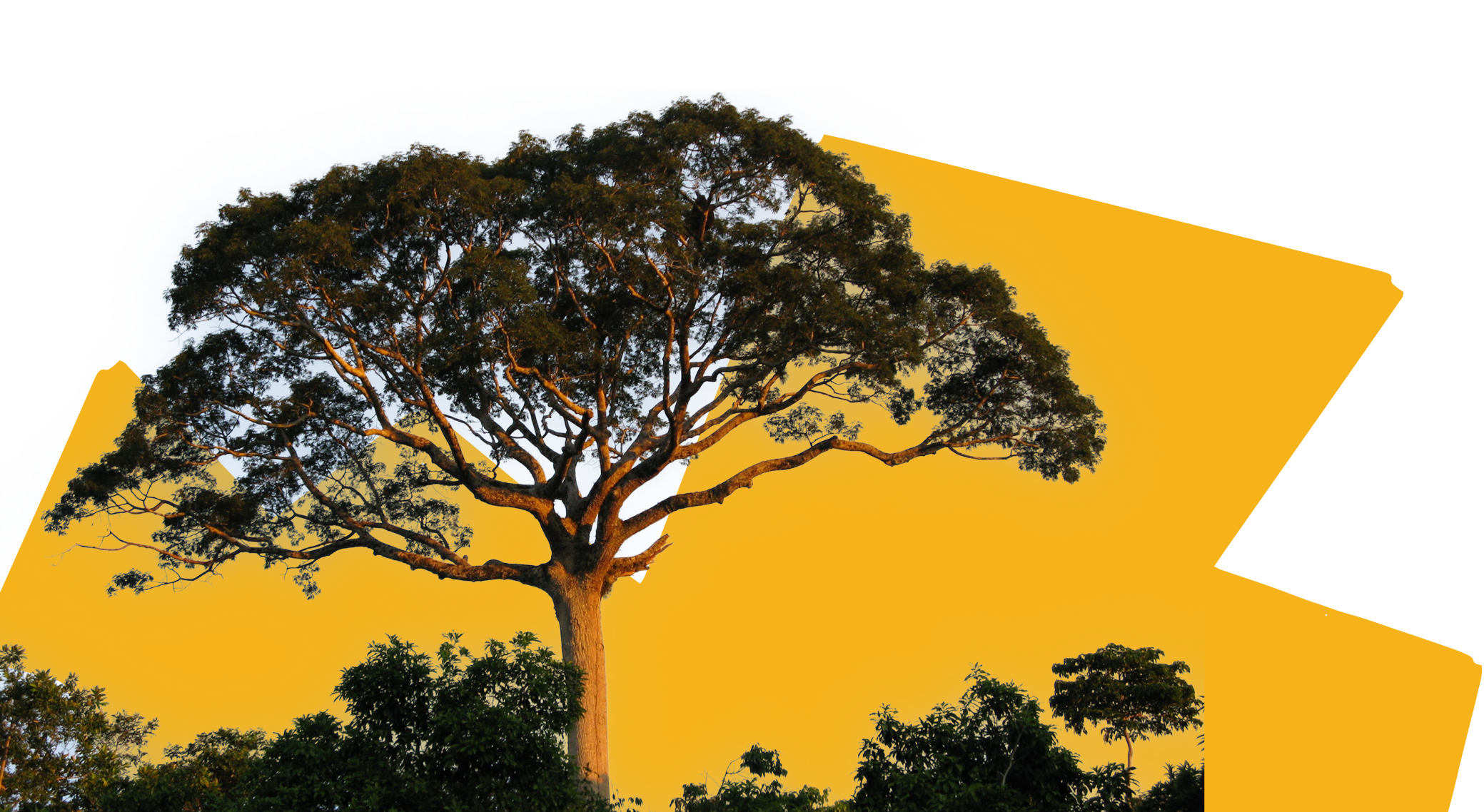
When I visited the ancestral lake named after Guarocuya in the Bahoruco Mountains, I crossed desert terrain and passed hungry iguanas to reach its hypersalinated waters. Those waters coursed over the skeletons of ceibas; as the lake rose, it slowly drowned tree roots and scattered the crocodile population. I walked over to a fossilized ceiba and put my hand to it. Later, I dreamt of the tree as it had been when it was alive. The word “ceiba” came to me during an ancestral elevation ritual, during which my ancient fathers confessed to me Arawakan secrets and mysteries. In other words, it was through the trees that I found my ancestors and made my way home.
The ceiba is sacred to Indigenous tribes in the Caribbean like the Arawak and Carib. As a sacred tree, it has served as a direct link to the spiritual world and a gathering place for communities. Arawakan elders also recount that, before colonization, the ceibas were big enough that we could live in them. The ceiba holds great significance not only as a representation of Mother Earth to Indigenous Caribbean tribes but also for enslaved Africans.
As Chinua Achebe writes in Things Fall Apart, “Behind them was the big and ancient silk-cotton tree which was sacred. Spirits of good children lived in that tree waiting to be born.” Over time, however, the ceiba began to take on a different meaning as a result of slavery and colonialism. In Jamaica, ceibas are sometimes called duppy trees and are known for housing the tormented spirits of formerly enslaved ancestors who died tragically. As witnesses to the lives, struggles, and deaths of our ancestors, these sacred trees represent the power of memory and how it can embed itself in nature. African and Arawakan ancestors shared cultural understanding of trees as living beings integral to communal survival of the tribe and the preservation of collective memory.
Sacred trees have been identity markers for tribes since time immemorial. Gods often emerge from the land and waterways on which their adherents depend, preserving truth in the midst of erasure and conquest. Indigenous communities around the world know the land is sacred and our first mother, protecting and nurturing us. The Arawakan semi (spirit), Yucahuguama, born of women only, has historically been buried in the soil with yucca by Arawakan communities to ensure it grows well and feeds the community. Much of what survived of our Arawakan culture was buried deep in the soil and imbued in the rocks, stones, and ceibas.
In the 1940s, an ecocidal and genocidal campaign carried out by the Catholic Church in Ayiti almost completely eradicated the ceiba in Haiti for this very reason—its sacredness. From the establishment of the Vatican over the ancient sibyl temples to the catholic churches scattered across the Caribbean, the implementation of the “New World” necessitates the systemic co-option of sacred mystical sites, often involving trees and other natural sites. I soon learned that the Catholic Church’s ecocide in Ayiti is a part of a larger continuum of arboricide which precedes even transatlantic slavery.
During the establishment of patriarchal Islam in parts of the ancient African world, the desecration of sacred trees went hand in hand with the violent imposition of religious authority, a process that usurped Indigenous practices of land stewardship and mother worship.
According to the Tafsir, exegetical literature surrounding Surah An-Najm verse 19, in 630 CE, after the fall of Mecca, Muhammad dispatched military commander Khalid ibn al-Walid to Nakhlah, where Al-Uzza’s primary sanctuary stood. Al-Uzza was part of a trinity of ancient African and pre-Islamic goddesses whose worship extended all over Africa and the Middle East. Khalid cut down the three sacred acacia trees where offerings were hung and smashed Al-Uzza’s stone idol, dismantling the physical representation of her power. He killed her priestess, who served as an intermediary for oracles, committing femicide while declaring he had conquered a demon. This narrative of desecration was then preserved and literally written into the religious explanatory texts of the conquering tradition.
As cultural historian, scholar and Chief Hounon Amengasie in the Mami Wata Vodun tradition, Awono Mama Zogbé writes in her book Mami Wata: Africa’s Ancient God/dess that, despite the desecration of sacred sites and long history of enslavement, the spirit of Al-Uzza lives on as Mama Tchamba. Mama Tchamba, whose name means “Grandmother slave,” honors the ancestors who were first sold into the Arabian slave trade following the destruction of Al-Uzza’s temples, and all ancestors sold into slavery thereafter. Many of the African ancestors who were enslaved in Ayiti were already descendants of Muslim slaves, like Maria Wolofa, Gonzalo Mandinga and Dutty Boukman, the latter an Islamic Vodun priest who helped lead ceremonies during the Haitian Revolution.
Despite the myth of Arawakan extinction, the continued cultivation of yucca, chayote and ceiba demonstrates that Afro-Indigenous communities existed and still exist. Reverence for the ceiba could not be erased through genocide, femicide, or arboricide. As the Afro-Curaçaoan proverb says, “Banana ta muri, vipe lo tei”—the banana tree will die, but the sprout will remain. Nature has the power to resurrect and conserve memories: trees ‘bring up’ those memories housed in the mycelia existing beneath our feet, in our soil and the water which contains and remembers.
From the tree goddesses of ancient Egypt to the haunted bark of the ceiba, nature always prevails. Surviving as trees, and as humans, we learn that there is a force much bigger than death, whether one calls it God or Spirit. This is the true power of the ceiba, the source of our ancestors’ strength to face the horrors of the “New World,” and continues to strengthen their descendants to this very day.