Volume III, Issue I Available for Pre-order Now


VOLUME III, ISSUE I OF THE LAND, FOOD, AND FREEDOM JOURNAL EMERGES IN THE AFTERMATH OF HURRICANE MELISSA AS COMMUNITIES THROUGHOUT THE CARIBBEAN CONTINUE TO GRIEVE, ORGANIZE, AND REBUILD THEIR LIVES IN REAL TIME. History has shown us that occurrences like Melissa are rarely singular events; they exist as part of a long continuum shaped by the impacts of climate crisis, extraction of natural resources, and global systems that often leave island nations most vulnerable. Given this issue’s focus on land, we feel a deep responsibility to turn our attention toward the Caribbean – not as a site of spectacle or devastation, but as a testament to land-based cultures, political resistance, and enduring relationship to place-making.
We see the land as both a teacher and a witness. Our intention, in part, was to center artists of Caribbean origin whose work conceptualizes the environment not as commodity, but as a source of kinship and survival. The artists gathered between these pages speak to that relationship through a multitude of mediums and unique perspectives.
Our cover piece, Motto on Canvas, is a stunning collaboration between Haitian artists Sophia “Phia” Dubuisson and Youveline Joseph. Drawing from the Haitian motto “L’union fait la force”, meaning “unity makes strength", their work affirms unity as a practice of survival. Using portraiture, three-dimensional textures, and homage to traditional dress and land, they honor their home not as a nation in perpetual crisis, but as a source of beauty, connection, and abundance.
Janet Adenike Adebayo’s Rehearsing Elegance explores this relationship to land through ritual and practice. Using materials linked to care and ancestral knowledge like coconut leaves and cinnamon bark, her work reflects how Black and Caribbean cultures transform what the land offers into timeless remedies. Her work is a reminder that stewardship often lives in the intimacy of making, tending, and remembering.
In her abstract painting A Farmer in Pink Overalls, Afton Williams-Jacobs examines the psychological ruptures caused by displacement, specifically from agrarian and pastoral ways of life. Her work not only speaks to the impacts of separation, but also to what’s possible when we are intentional and imaginative in our approach to repairing those fractures.
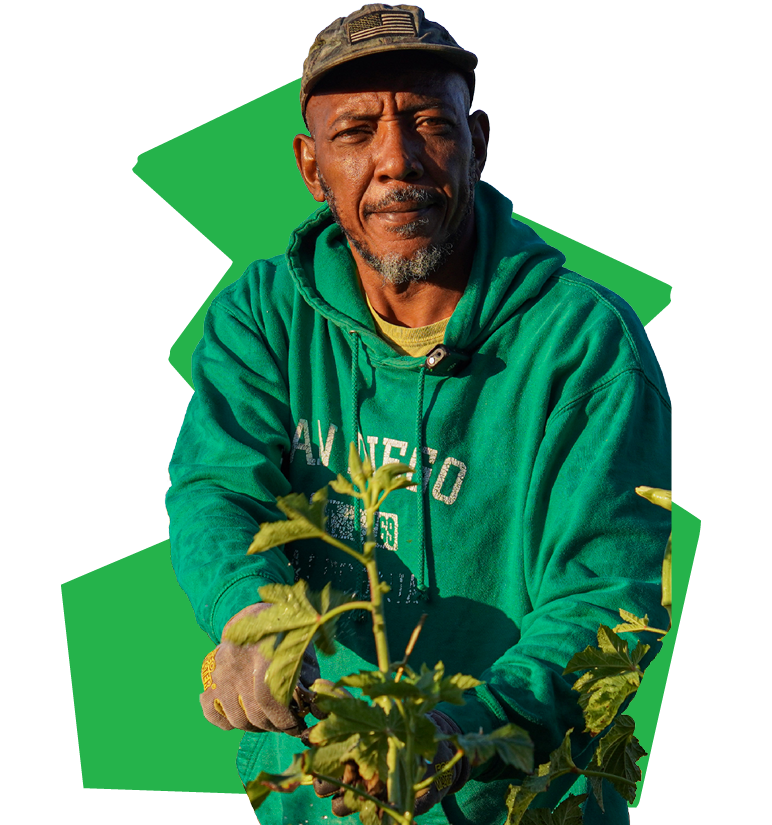
Portia Langley’s The Okra Boss grounds us in soil, sweat equity, and lineage. Her photography series gives us a glimpse into a day with farmer Kevin, and evokes land as a sacred archive – one that remembers every hand that has ever tended to it. During a period of instability, both in climate and politics, and the day-to-day impacts of global food insecurity, Langley’s work highlights the power of ancestral practices, farmer expertise, and land-based resilience.
In our first fashion feature, Robert Anthony Young uses textile and design to honor Maroon communities and legacies of land defense and cultural sovereignty. Using materials grown exclusively in the West Indies, Young treats land as both a place of sanctuary and a trusted collaborator. His art is a beautiful reminder that land stewardship extends into how we source, produce, and share what the land provides.
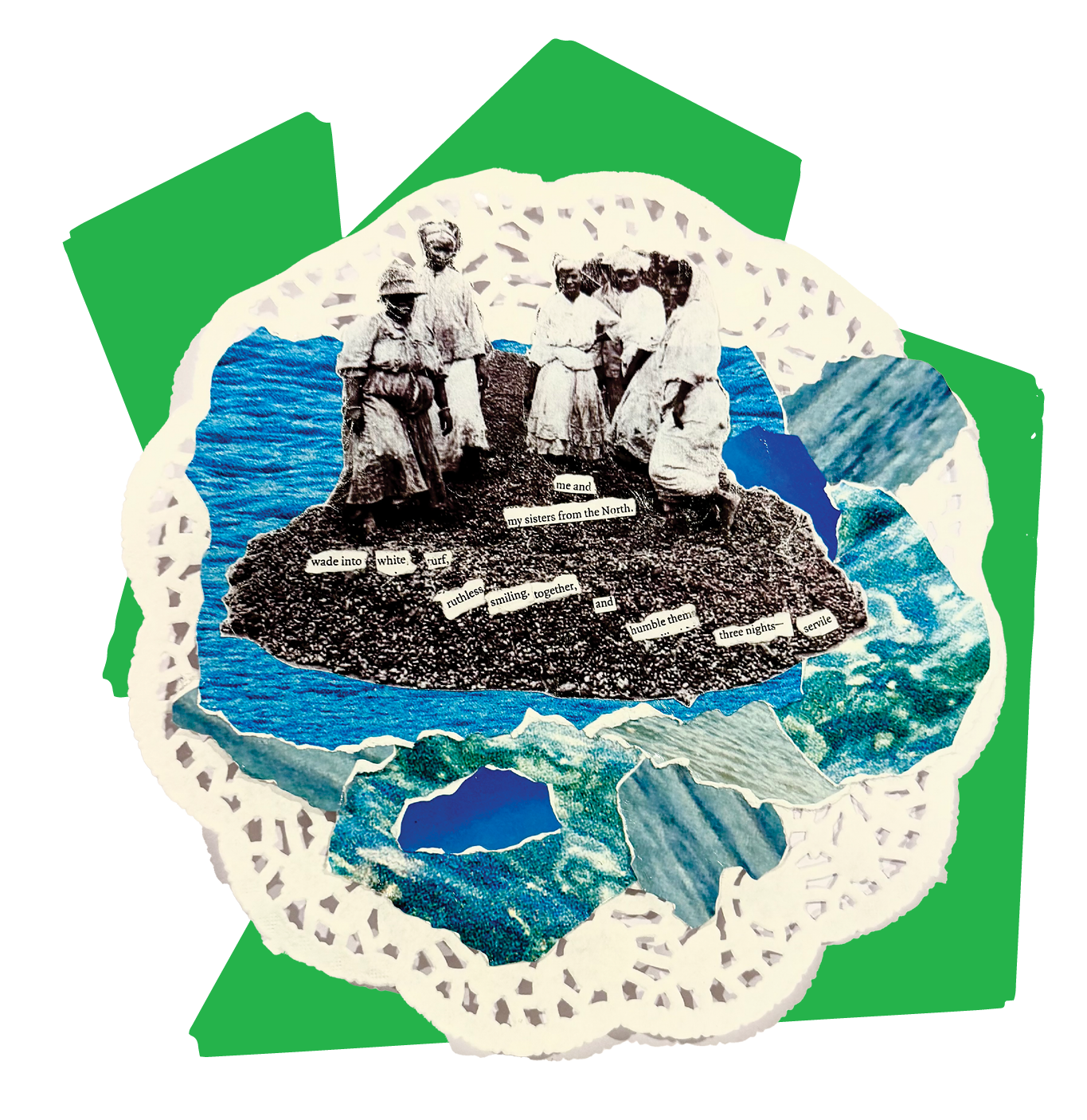
Finally, Maleyah Peterson’s Cote ci Cote la, Destrukshun in Salt, A Doily Strip positions land and sea as intertwined sites of resistance and memory. In the wake of Hurricane Melissa, Peterson’s work confronts the violence embedded throughout Caribbean waters. Using a combination of collaged pieces and poetry, her work reclaims the ocean as an ancestral witness and infinite site of Black imagination.
An abundance of gratitude to each artist for not only naming what has been lost, but what continues to be fiercely protected. This curation affirms what land-based cultures across the world have always known: land is not separate from us. It is our family – past, present, and future’s.
In joy and solidarity,
Tabia Lisenbee-Parker
O VOLUME III, EDIÇÃO I DO LAND, FOOD, AND FREEDOM JOURNAL SURGE APÓS O FURACÃO MELISSA, ENQUANTO COMUNIDADES EM TODO O CARIBE CONTINUAM A LAMENTAR, SE ORGANIZAR E RECONSTRUIR SUAS VIDAS EM TEMPO REAL. A história nos mostrou que ocorrências como Melissa raramente são eventos isolados; Eles existem como parte de um longo continuum moldado pelos impactos da crise climática, extração de recursos naturais e sistemas globais que frequentemente deixam as nações insulares mais vulneráveis. Dado o foco desta edição na terra, sentimos uma profunda responsabilidade de voltar nossa atenção para o Caribe – não como um cenário de espetáculo ou devastação, mas como um testemunho das culturas baseadas na terra, da resistência política e da relação duradoura com a criação de lugares.

